
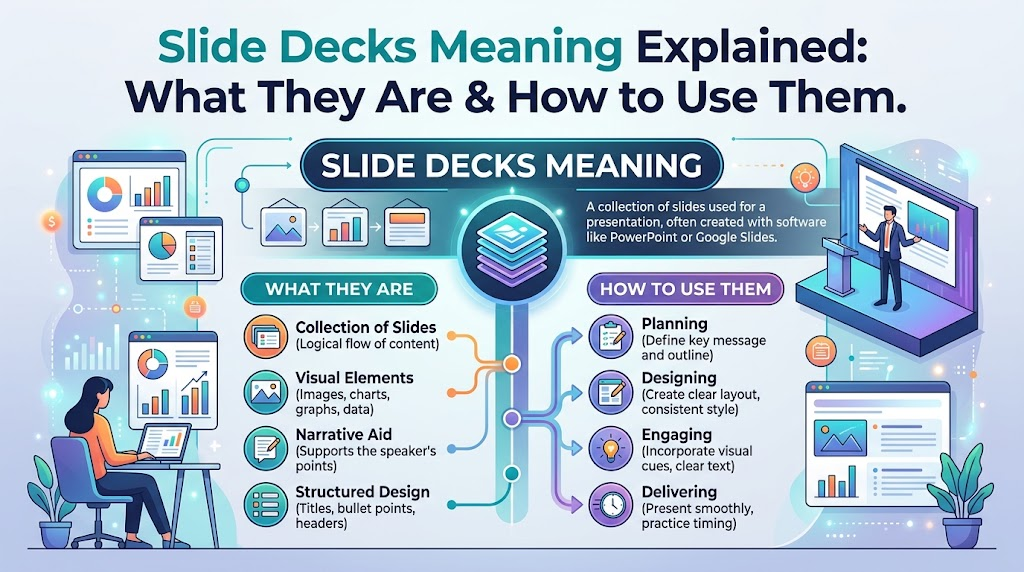

When people talk about the Slide Decks Meaning, they usually mean a visual presentation made with software like PowerPoint or Google Slides. Think of it as a digital picture book that helps you share ideas with a group. Instead of handing out long, boring papers, you put your main points on big, bright screens. Every single slide acts as a tiny billboard. It shows one clear idea, a cool picture, or a simple chart.
Long ago, people used actual plastic slides in big projectors. Today, we use computers, tablets, and phones to flip through our digital pages. The core slide decks meaning is all about visual storytelling. When you stand up in front of a room, your words tell the main story. Your visual pages act as helpful hints that keep everyone paying attention. If you want to know the true slide decks meaning, look at how it brings people together. It bridges the gap between what you say out loud and what your audience sees. By breaking big topics into smaller pieces, you make sure no one gets lost.
Why Every Team Needs a Presentation Deck
Understanding the slide decks meaning helps you see why offices and schools use them constantly. Imagine trying to explain a brand-new business plan with just your voice. People get tired, lose focus, and forget important details. A great presentation deck keeps everyone on the same track. As a professional content manager, I use these visual tools daily to pitch new ideas to clients. When you look at the slide decks meaning in real life, it is all about clear communication. Teams build these files to share project goals, track weekly sales, or pitch new products to investors.
Another big part of the slide decks meaning is saving time. Instead of repeating the same speech ten times, you build one clean file. You can email it to coworkers who missed the live meeting. They can read through the pages at their own pace. This makes remote teamwork so much easier. When everyone can view the same charts and bullet points, misunderstandings disappear. A well-made presentation deck turns confusing numbers into a fun, easy story that anyone in the room can grasp instantly.
| Feature | Basic Slide Deck | Traditional Document |
| Main Format | Visual screens with bullets and images | Long blocks of text on paper |
| Best Used For | Live meetings, pitches, and webinars | Deep reading, contracts, and reports |
| Engagement Level | High visual energy and quick pacing | Slower, quiet, and independent study |
| Primary Goal | Explain a quick concept to a group | Share deep data and legal rules |
Core Parts of a Great Presentation File
To really master the slide decks meaning, you need to know what goes inside one. A good file always starts with a bold title page. This first slide tells people the exact topic and who is speaking. Next comes an agenda page. Think of the agenda as a mini map that shows where the presentation is heading. After that, you share your main points, backed up by simple charts, icons, or photos. Every page should focus on one single thought so your readers never feel overwhelmed.
As you dive deeper into the slide decks meaning, remember that less is always more. Beginners often make the mistake of packing every inch with tiny text. That defeats the whole purpose of a visual presentation. People cannot read a paragraph and listen to your voice at the exact same time. Keep your bullet points short and sweet. Let your images do the heavy lifting. Finally, every good deck ends with a summary slide and a clear call to action. This leaves your audience knowing exactly what steps to take next.
Step-by-Step Guide to Building Your First Visual Deck
Getting started with the slide decks meaning is much easier than you think. You do not need to be a professional artist or a master programmer to build a great file. First, open your favorite presentation tool like Google Slides, Canva, or Microsoft PowerPoint. Pick a clean, simple template that matches your topic. Avoid wild colors or crazy fonts that hurt the eyes. Stick to a maximum of two matching fonts and three primary colors to keep the design looking sharp and professional.
Next, draft your text in a separate notebook before touching the computer. Once your ideas are ready, drop them onto your digital pages one by one. Remember to keep the slide decks meaning at the heart of your design process. Every page should answer a specific question for your reader. Add a few bright icons or real photos to break up the gray text. When you finish, click through your presentation from start to finish. If any single page feels too crowded or confusing, split it into two separate slides.
Common Mistakes to Avoid When Designing Slides
Even experienced speakers sometimes forget the true slide decks meaning and make basic design errors. The number one mistake is putting way too many words on a single screen. If your audience spends the whole meeting reading paragraphs, they stop listening to your voice. Keep your text brief, using punchy phrases instead of long sentences. Another common trap is using low-quality images that look blurry or stretched out. Always use crisp, high-resolution pictures that add real value to your message.
Color choices can also make or break your presentation. If you use yellow text on a white background, nobody will be able to read a single word. Always ensure high contrast between your background and your letters. Think deeply about the slide decks meaning as a tool for connection, not a test of eyesight. Finally, avoid going crazy with spinning slide transitions and loud sound effects. Simple, clean fades look professional and keep the focus right where it belongs: on your amazing ideas.
How Pitch Decks Help Businesses Win New Clients
When startup founders look for funding, they rely heavily on a special type of presentation file called a pitch deck. This specific angle of the slide decks meaning focuses entirely on business growth and investor relations. A strong pitch deck tells a compelling story about a painful problem in the world. Then, it introduces your product as the ultimate hero that solves that exact problem. Investors see dozens of these files every week, so yours needs to be crystal clear, honest, and exciting.
When I help friends put together their business proposals, I always remind them about the slide decks meaning in high-stakes environments. Your slides should prove that you understand your target market inside and out. Include real customer feedback, simple financial charts, and a snapshot of your talented team. By keeping your message straightforward and honest, you build instant trust with investors. A great pitch deck does not just share data; it makes people believe in your vision for the future.
Best Tools to Create Stunning Presentations Today
Choosing the right software plays a massive part in bringing the slide decks meaning to life. Today, you have access to incredible digital tools that make design feel like a breeze. Google Slides is fantastic for teamwork because multiple people can edit the same file at the exact same time from different homes. Microsoft PowerPoint remains the gold standard for offline power users who want advanced animations and deep customization controls. Both options give you thousands of pre-made templates to start with.
If you want something ultra-modern and full of creative flair, platforms like Canva or Premo are amazing choices. They offer gorgeous graphics, trendy fonts, and drag-and-drop features that anyone can master in minutes. No matter which software you pick, remember that the tool is just a vehicle. The true slide decks meaning comes from the clarity of your thoughts and the care you put into helping your audience learn something new. Pick the tool that feels most comfortable for your daily workflow and start creating.
Tips for Delivering an Unforgettable Presentation
Creating a great file is only half the battle; knowing how to present it defines the true slide decks meaning. Standing in front of a live crowd can feel scary, but preparation changes everything. Practice your speech out loud at least three times before the big day. Do not read directly off the screen word for word. Your audience can read faster than you can talk! Instead, use your slides as anchor points while you tell a natural, engaging story with your voice.
Another secret to mastering the slide decks meaning during a live talk is pacing yourself. Take a deep breath between slides and make friendly eye contact with people around the room. If someone asks a question, pause and answer it with a smile. Remember that everyone in the room wants you to succeed. By combining a clean, beautiful presentation file with a warm, conversational speaking style, you will leave a lasting impression that inspires and motivates your audience.
Frequently Asked Question
What is the simple definition of a slide deck?
A slide deck is a set of visual pages created using software like PowerPoint or Google Slides to support a live presentation or meeting.
Why do people use presentation decks instead of text documents?
They turn complex data into visual images, making it much easier for a group to understand and remember key points quickly.
How many slides should a standard presentation have?
It depends on your time limit, but most business meetings work best with ten to fifteen well-designed slides.
Can beginners design a professional slide deck easily?
Yes! Modern tools like Google Slides and Canva offer ready-to-use templates that make professional design simple for anyone.
What should I avoid putting on my presentation slides?
Avoid long paragraphs, tiny fonts, blurry images, and too many distracting animation effects.
How do slide decks help with remote team collaboration?
Team members can open, edit, and review the same digital file from anywhere in the world, keeping everyone aligned on project goals.
Conclusion
Understanding the true slide decks meaning unlocks a powerful way to share your ideas with the world. Whether you are pitching a new business to investors, teaching a classroom of eager students, or sharing a weekly report with your coworkers, clear visual storytelling makes all the difference. Keep your designs clean, your words simple, and your focus on helping your audience learn. Start building your next presentation today, and watch how easily you can engage and inspire everyone in the room!